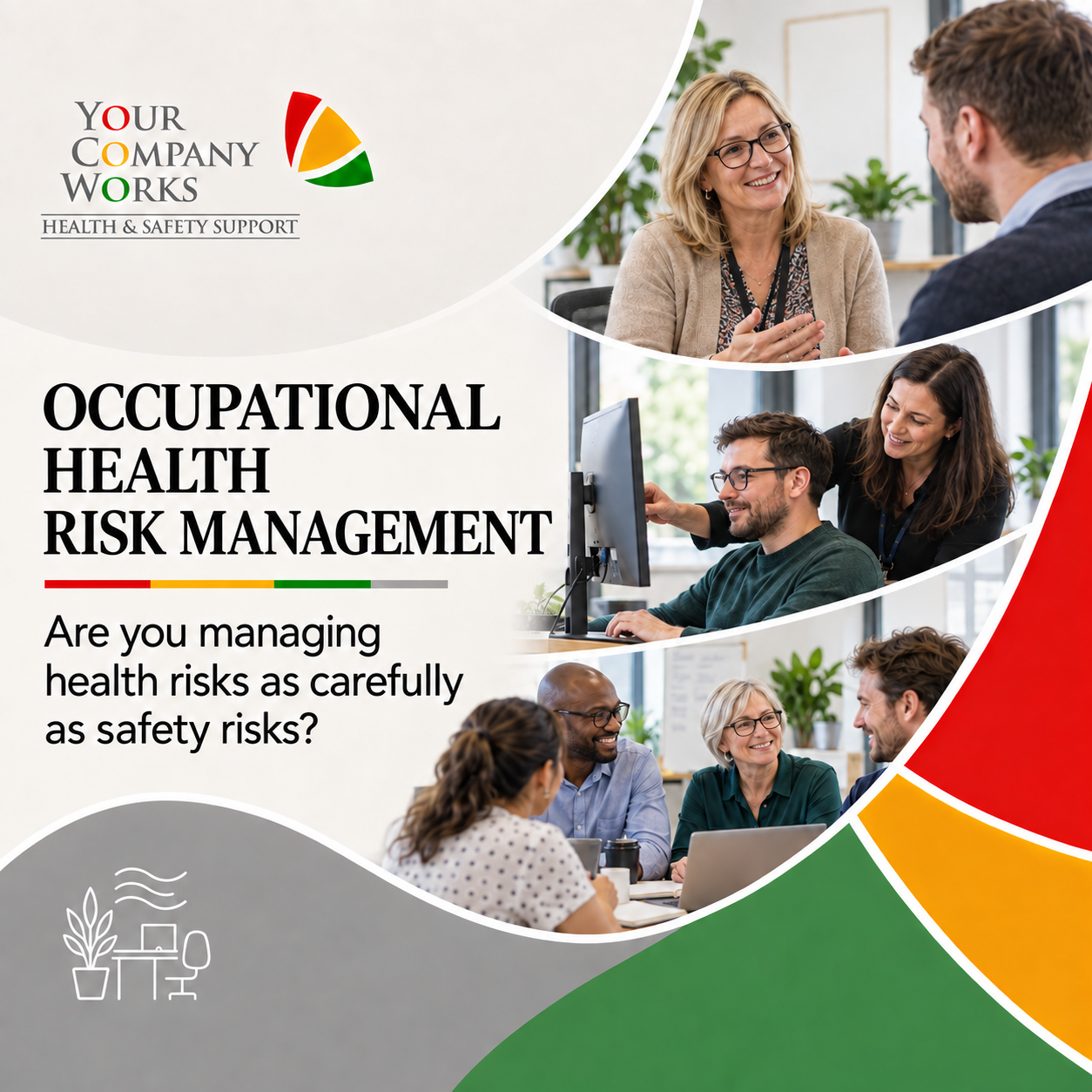
Occupational health risk management helps prevent work-related ill health by identifying and controlling the physical and psychological risks that can affect people at work.
Occupational Health Awareness Week is an opportunity for organisations to look beyond immediate safety hazards and consider how everyday working conditions may affect employees’ long-term health.
Some workplace risks are easy to see, such as an obstructed walkway or damaged equipment. Others develop gradually. Poor workstation setup, repetitive movement, manual handling, exposure to hazardous substances, noise, vibration, work-related stress and excessive workloads can all affect a person’s health over time.
Effective occupational health risk management makes these risks part of everyday health and safety planning, helping organisations protect their people and build healthier, more supportive workplaces.
Why Occupational Health Risk Management Matters
Occupational health and workplace health and safety work most effectively when they are considered together.
Health and safety management provides the framework for identifying hazards, assessing risks and introducing suitable controls. Occupational health brings specialist clinical expertise where it is needed, including support for employees with health conditions, rehabilitation and a safe return to work.
The two areas are closely connected, but their roles are not interchangeable. A health and safety adviser can help an organisation identify work-related health risks and improve its management arrangements. However, medical assessments, diagnosis and clinical recommendations should be provided by a qualified occupational health professional.
Good occupational health risk management helps employers recognise when practical workplace controls are required and when specialist occupational health advice may be appropriate.
Work-Related Health Risks Are Not Always Obvious
Work-related ill health rarely begins with one dramatic incident. The early warning signs may be less visible and can easily be overlooked.
These signs might include:
- Recurring back, neck or shoulder discomfort
- Headaches, eyestrain or fatigue linked to screen use
- Tingling, numbness or pain caused by repetitive work
- Increased sickness absence
- Employees working while unwell
- Difficulty concentrating or making decisions
- Changes in behaviour, confidence or performance
- Persistent tiredness, stress or emotional exhaustion
- Concerns about workloads, deadlines or lack of support
These issues should not automatically be treated as individual performance problems. They may indicate that workplace risks, working arrangements or existing controls need to be reviewed.
Listening to employees is an important part of identifying these concerns. Staff often notice changes and emerging problems before they appear in absence figures or formal reports.
Occupational Health Risk Management for Physical and Psychosocial Risks
A strong approach to occupational health risk management considers both physical and psychosocial hazards.
Physical health risks may include:
- Display screen equipment and unsuitable workstation setups
- Manual handling and repetitive movements
- Hazardous substances, dust, fumes or cleaning products
- Noise and vibration
- Poor lighting, temperature or ventilation
- Inadequate welfare arrangements
- Work equipment that is unsuitable for the person using it
Psychosocial risks can include:
- Excessive or conflicting demands
- Unmanageable workloads
- Lack of control over how work is completed
- Poor communication or limited management support
- Unclear responsibilities
- Organisational change that is not managed effectively
- Bullying, harassment or difficult workplace relationships
- Lone working or emotionally demanding roles
- An unhealthy work-life balance
These risks should not be managed through separate, disconnected processes. For example, discomfort caused by an unsuitable workstation can affect concentration and wellbeing. At the same time, high workloads may discourage someone from taking breaks or reporting pain.
An effective risk assessment considers how different hazards interact and whether existing controls are genuinely protecting the people doing the work.
Five Questions for Managers
Organisations can strengthen their occupational health risk management by asking five practical questions.
1. Have we identified the health risks associated with the work?
Risk assessments should consider more than accidents and immediate injuries. They should also examine potential causes of long-term ill health, including musculoskeletal problems, exposure risks and work-related stress.
Your Company Works can support organisations with proportionate, practical workplace risk assessments that reflect the work actually being carried out.
2. Are our controls working in practice?
A written policy or completed risk assessment does not automatically mean a risk is being managed effectively.
Managers should check whether employees understand the controls, whether equipment is suitable and whether agreed procedures are consistently followed. Reviews should also take place when work activities, staffing, equipment or individual circumstances change.
3. Are employees encouraged to raise concerns early?
People are more likely to report discomfort, stress or health concerns when they feel they will be listened to and supported.
Early conversations can help an organisation make straightforward adjustments before a concern develops into long-term sickness absence. Managers should know how to respond sensitively, record relevant information appropriately and seek specialist advice when necessary.
4. Do our managers understand their responsibilities?
Managers do not need to diagnose health conditions, but they should understand how work can affect health.
They should be able to recognise potential warning signs, have appropriate conversations, follow internal procedures and escalate concerns. Clear policies and suitable training give managers the confidence to respond consistently.
5. Do we know when specialist occupational health advice is needed?
Some issues can be addressed through risk assessment, improved equipment, better planning or temporary workplace adjustments. Other situations require clinical occupational health input.
This may include advice about an employee’s fitness for work, rehabilitation, health surveillance, medical restrictions or a safe return following illness. Recognising that boundary is an essential part of responsible occupational health risk management.
The Scale of the Occupational Health Challenge
The UK continues to face a significant challenge from long-term ill health and economic inactivity.
IOSH reports that approximately 2.8 million working-age adults are out of work because of ill health. It also highlights that only 45% of UK workers currently have access to occupational health provision.
These figures demonstrate why prevention and early intervention matter. Smaller organisations may not have an internal occupational health or health and safety department, but they still need suitable arrangements for identifying risks, supporting employees and obtaining specialist advice when required.
Proportionate occupational health risk management can help organisations act earlier, reduce avoidable harm and demonstrate that employee health is being taken seriously.
Practical Occupational Health Risk Management Support
Your Company Works provides practical health and safety support for organisations that need additional knowledge, capacity or confidence.
Depending on your organisation’s needs, Your Company Works can help with:
- Workplace risk assessments
- Health and safety policies and procedures
- Display screen equipment assessments
- Manual handling risk management
- Work-related stress risk assessments
- Support for employees returning to work
- Reviews following changes in health or working arrangements
- Manager guidance and practical action plans
- Ongoing Competent Person support
Our approach is calm, proportionate and focused on workable solutions. We help organisations understand what needs to be done, why it matters and how improvements can be introduced without unnecessary complication.
Where specialist clinical input is required, we can also help you recognise the need for an appropriate occupational health referral. Your Company Works does not provide medical diagnosis or clinical occupational health assessments.
We can also provide DSE and workstation assessment support to help identify practical changes that may reduce discomfort and improve working arrangements.
Creating a Healthier Workplace
Good work can have a positive effect on people’s health, confidence and wellbeing. However, this depends on risks being properly managed and employees receiving the right support at the right time.
Occupational Health Awareness Week is a useful prompt, but occupational health risk management should continue throughout the year. Regular reviews, open conversations and early action can make a meaningful difference to employees and the organisation as a whole.
If you are unsure whether your current arrangements adequately address work-related health risks, contact Paula to arrange a friendly, free, no-obligation chat. We can help you review your approach, identify sensible priorities and put practical improvements in place.
Telephone: 07799 533094
Email: paula@yourcompanyworks.com