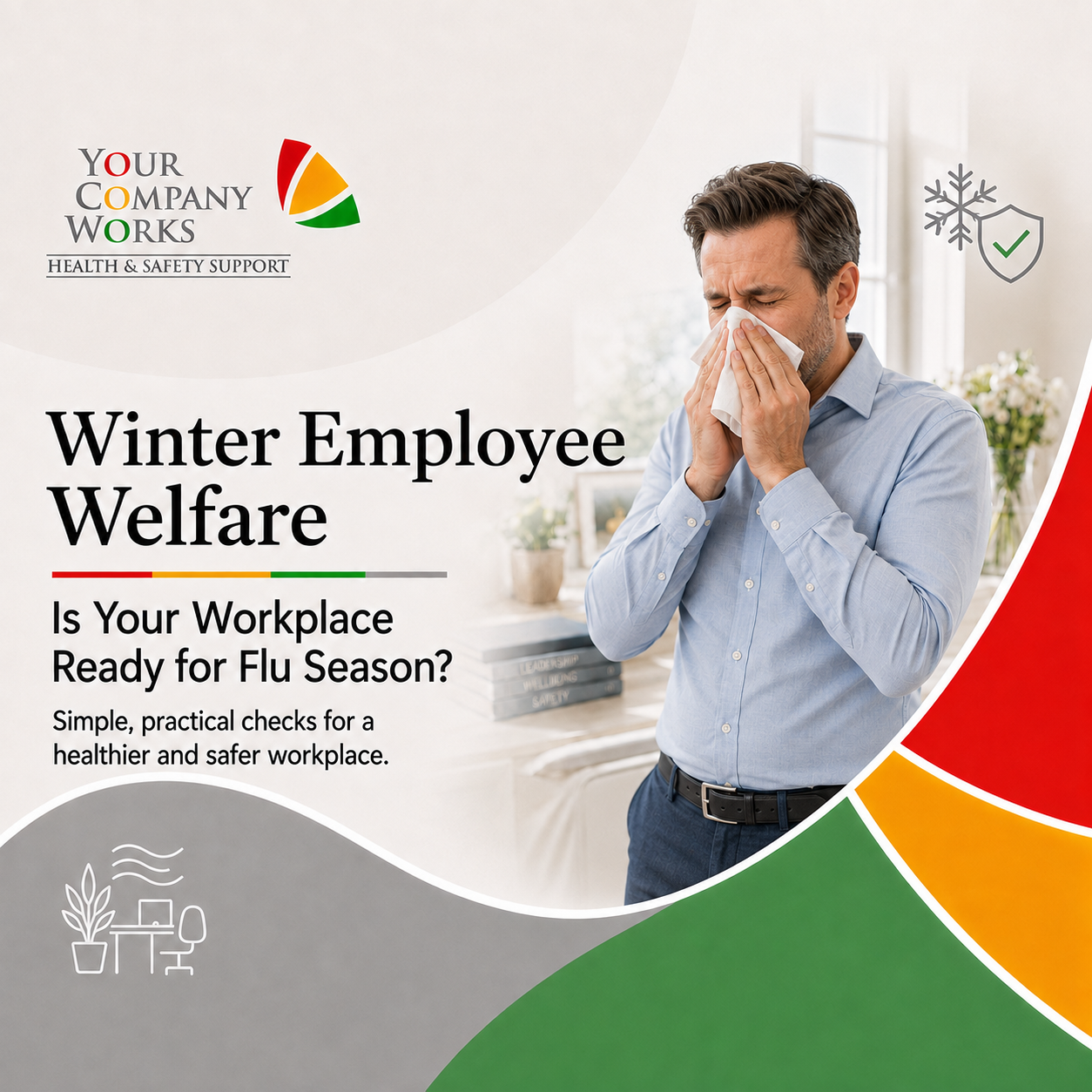
As summer begins to give way to autumn, flu season becomes a practical concern for many workplaces. For a busy business owner or office manager, the challenge is not to create panic or another folder of paperwork. It is to make sure the arrangements you already rely on will continue to work when more people are unwell.
Flu is primarily a public health and employee wellbeing issue, but there is a genuine workplace health and safety connection. Employers still need to provide a healthy working environment, suitable welfare facilities and adequate ventilation. They also need to maintain practical arrangements such as first aid and emergency procedures when people are absent.
For a typical low-risk office, this will usually mean a proportionate review of existing arrangements rather than a separate, complicated flu risk assessment.
Workplaces where employees may be exposed to biological agents because of the work they carry out, including some health and social care settings, need a more specific assessment under COSHH and should follow the guidance for their sector.
1. Make handwashing easy
The starting point is not a row of hand-sanitiser bottles. Check that people have easy access to clean washing facilities, warm water, soap and a suitable way to dry their hands. Tissues and suitable waste bins should also be available, and shared areas should be kept clean.
The NHS advises regular handwashing, covering coughs and sneezes and disposing of used tissues promptly to reduce the spread of flu. In an office, these basic arrangements are often more sustainable than a large seasonal cleaning campaign that soon fades.
2. Check ventilation before the colder weather
Employers must make sure enclosed workplaces have adequate ventilation. That can feel harder when the temperature drops, but improving fresh air does not always mean leaving every window wide open.
HSE suggests measures such as using trickle vents, partly opening windows, using higher-level windows to reduce draughts, or airing rooms between use. If your workplace relies on mechanical ventilation and nobody is sure how much fresh air it supplies, that is a useful point to raise with the building or facilities manager. Fire doors must not be propped open to improve airflow.
3. Make it clear what happens when someone is unwell
People should know how to report sickness, who they need to contact and what the organisation expects. A clear and fair approach can reduce the pressure to attend work when someone is too unwell to carry out their normal activities safely.
NHS guidance says people should try to stay at home and avoid contact with others if they have a high temperature, feel hot, cold or shivery, or do not feel well enough to do their normal activities. Your sickness policy and employment decisions should be reviewed with HR or employment-law support, but the health and safety arrangements should not depend on an unwell person attending work.
4. Confirm cover for essential safety arrangements
If several people are absent at once, would your first-aid and emergency arrangements still work? HSE advises employers to consider holiday and other absences when assessing first-aid needs. The same practical question applies to the people who support evacuations, unlock premises, supervise higher-risk activities or complete essential checks.
This does not require a dramatic contingency plan. Confirm who provides cover, whether they are trained and competent for the role, and how the arrangement is communicated. Avoid relying on one person for something essential.
5. Consider individual circumstances
Some employees may be more concerned about seasonal illness because of pregnancy, a disability, a long-term health condition or treatment that affects their immune system. Do not assume what somebody needs or ask for more medical information than is necessary.
Instead, create a private route for the person to raise concerns. Review the relevant workplace risk assessment if their circumstances reveal a work-related risk, consider reasonable adjustments where required, and involve occupational health, HR or their healthcare professional when specialist advice is needed.
6. Decide whether to offer flu vaccinations
Offering employees a flu vaccination can be a useful wellbeing measure, but it does not replace ventilation, hygiene or other workplace controls. For most office-based employers it is an optional benefit. Different guidance applies to frontline health and social care workers.
From 6 April 2026, an employer-provided flu vaccination can be exempt from Income Tax whether the employer arranges it, pays the provider or reimburses the employee. A National Insurance exemption also applies. The exemption does not cover salary-sacrifice arrangements or vaccinations for an employee's family or household. Employers should confirm the payroll treatment with their accountant or payroll provider. Find out more here .GOV info
A calm winter welfare review
A useful review can be completed by asking six questions:
- Are washing facilities stocked, accessible and clean?
- Is fresh air reaching occupied spaces without creating avoidable discomfort?
- Do employees know how to report sickness and raise a concern?
- Is there suitable cover for first aid and emergency arrangements?
- Can individual needs be raised and reviewed privately?
- Will the business offer or reimburse flu vaccinations this year?
Your Company Works helps busy business owners and managers review workplace risks, welfare arrangements and health and safety systems, then turn the findings into clear, manageable actions.
Book a free 20-minute online chat with Paula to clarify what your workplace needs before winter.
Telephone: 07799 533094
Email: paula@yourcompanyworks.com
Website: www.yourcompanyworks.com
This article provides general information and does not replace advice based on your workplace, employment arrangements or individual medical circumstances.